


- Home
- >
- Blog
- >
- Materials & Finishes
- >
- GPO-3 CNC Machining: Design Tips, Applications & Custom Insulation Parts
GPO-3 CNC Machining: Design Tips, Applications & Custom Insulation Parts
GPO-3 is a fiberglass-reinforced polyester laminate used in electrical insulation and industrial components. While standard sheets provide the starting material, many electrical assemblies require custom-machined spacers, supports, brackets, and insulating plates with specific dimensions and mounting features.
GPO-3 CNC machining allows manufacturers to turn laminate stock into custom components based on technical drawings. However, the glass reinforcement, thermoset resin, and layered material structure require different machining considerations from conventional metals and unfilled plastics.
For engineers and purchasing teams, understanding these factors can help improve part design, reduce manufacturing risk, and prepare more complete requests for quotation (RFQs).
What Is GPO-3 Material?
GPO-3 is a glass-mat-reinforced thermosetting polyester laminate. It is commonly associated with the NEMA GPO-3 designation and is often specified for electrical insulation applications.
Depending on the material grade and manufacturer's technical data, GPO-3 can offer a useful combination of:
- Electrical insulation properties for suitable industrial applications.
- Resistance to electrical tracking and arcing under specified test conditions.
- Mechanical rigidity for insulating supports and structural components.
- Flame-resistance characteristics defined by the selected grade.
- Dimensional stability for appropriately designed components.
GPO-3 is different from FR4/G10 epoxy fiberglass laminate. Although both material families are reinforced composites used in electrical and industrial applications, their resin systems, properties, and applicable specifications are not interchangeable.
Material selection should be based on the actual operating environment, electrical requirements, mechanical loads, and the applicable manufacturer's data sheet. If a project requires a particular standard or material certificate, it should be stated on the engineering drawing or purchase specification.
Can GPO-3 Be CNC Machined?
Yes. GPO-3 laminate can be machined into custom components using suitable milling, drilling, routing, profiling, and related operations.
CNC machining is particularly useful when the finished component requires more than a simple rectangular profile, such as:
- Precise mounting-hole locations and repeated hole patterns.
- Slots, cutouts, or internal openings.
- Complex external profiles and shaped insulating barriers.
- Recessed mounting features and stepped geometries.
- Consistent dimensions across multiple custom parts.
The machining approach depends on the laminate thickness, part geometry, required tolerances, tool access, and production quantity. Some simple two-dimensional shapes may be suitable for other cutting methods, while parts with multiple machined features often benefit from CNC processing.
Typical Applications of CNC Machined GPO-3 Parts
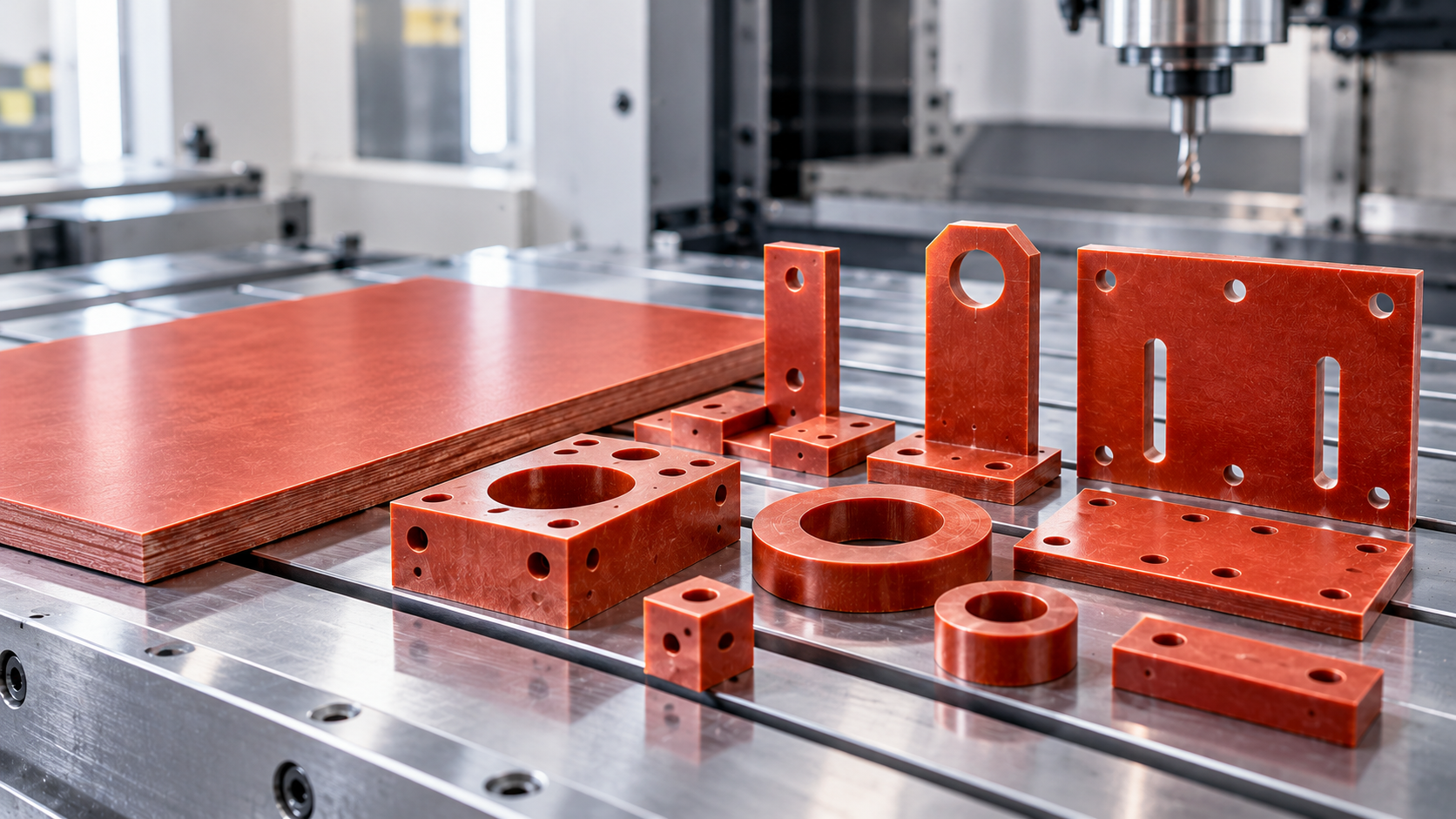
GPO-3 is used in various electrical and electromechanical assemblies. The following examples illustrate the types of components that may be produced from suitable laminate stock.
1. Electrical Insulation Spacers
Custom spacers help maintain separation and positioning between components. Machined hole locations, overall thickness, and contact surfaces may be important for assembly fit.
2. Busbar Supports and Insulating Brackets
Supports and brackets can combine insulating functions with mechanical positioning. Designs may include mounting holes, elongated slots, and custom outlines to accommodate the surrounding assembly.
3. Switchgear Insulation Plates
Custom insulating plates and barriers may be used in switchgear assemblies where suitable material properties and geometry are required. Electrical clearances and creepage distances must be determined by the equipment designer according to the applicable requirements.
4. Transformer and Industrial Insulation Components
Machined supports, spacers, and barriers may be used in electrical equipment when GPO-3 is suitable for the specific operating conditions.
Not every GPO-3 grade is appropriate for every electrical application. Final material approval remains dependent on the equipment design and relevant technical specifications.
Machining Challenges and Process Considerations
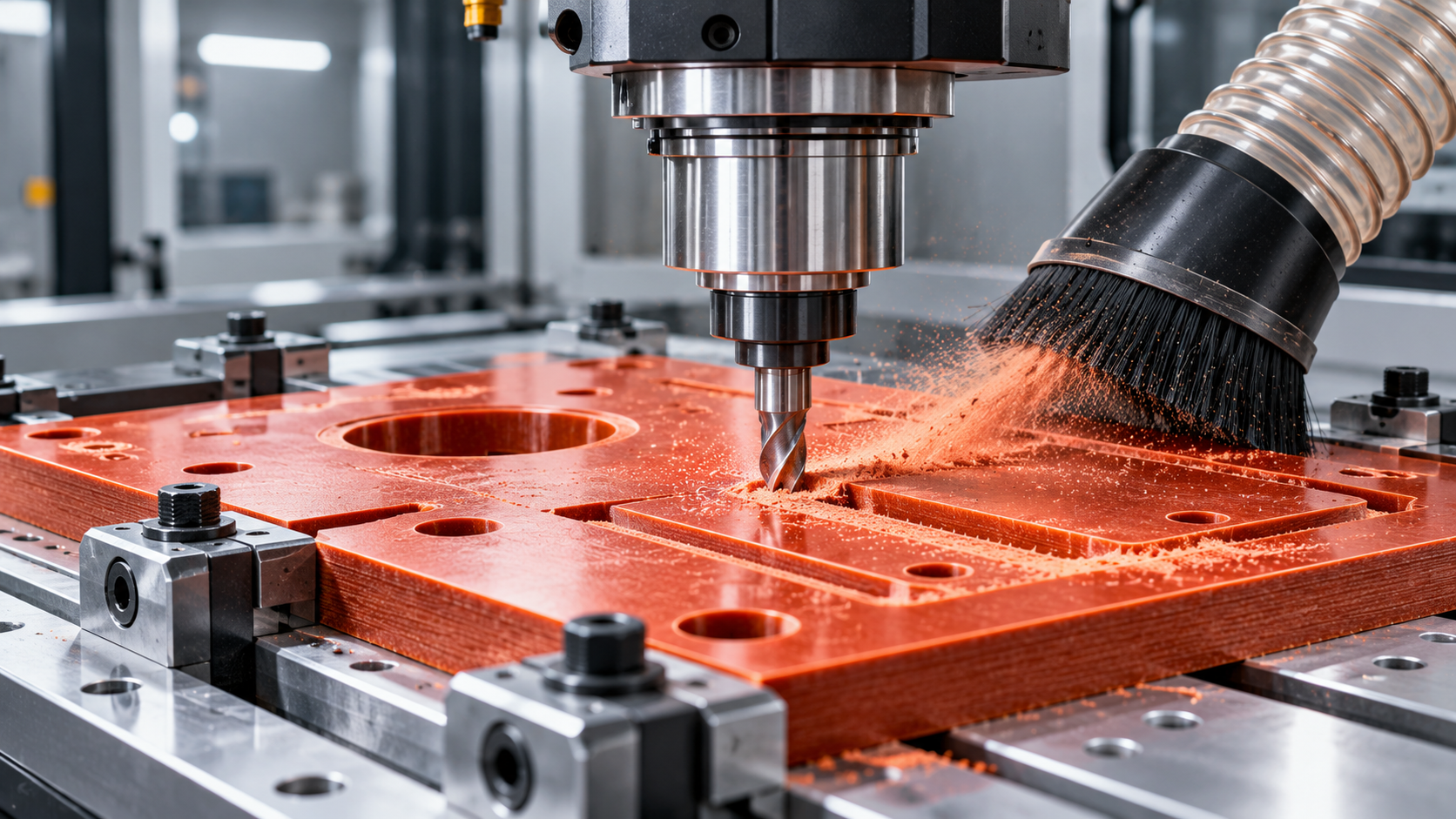
GPO-3 machining requires attention to the behavior of glass-reinforced composites. Several factors can influence achievable part quality, machining efficiency, and production consistency.
Abrasive Reinforcement and Tool Wear
Glass reinforcement can be abrasive to cutting tools. As tooling wears, edge quality and dimensional consistency may deteriorate.
Tool material, cutting-edge condition, machining strategy, and inspection frequency should be selected according to the application. Wear-resistant tooling may be beneficial for certain operations, especially in repeat production.
Edge Chipping and Layer Damage
Inadequate support, unsuitable cutting conditions, or excessive localized forces may contribute to chipped edges or damage around drilled openings.
Appropriate workholding, tool condition, and machining sequence can help reduce these risks. Narrow features and thin sections deserve particular attention during design review.
Dust Extraction and Workplace Safety
Machining glass-reinforced laminates can produce airborne dust and fine particles. Suitable extraction, housekeeping, and protective measures should be used according to the material safety information and applicable workplace requirements.
Dust-control requirements should be considered as part of the manufacturing process rather than treated as an afterthought.
Heat Management and Surface Quality
Excessive heat during cutting can affect the resin system and finished-edge quality. Proper tooling, suitable cutting conditions, and effective debris removal help maintain a controlled operation.
Universal cutting speeds and feeds should not be assumed for all GPO-3 parts. Parameters must be evaluated for the specific material, tooling, geometry, and equipment.
Design Tips for Custom GPO-3 CNC Machining
Good design-for-manufacturability (DFM) practices can help reduce avoidable machining complexity and improve communication between engineers and manufacturers.
Specify the Correct Material
Clearly identify the required laminate designation, thickness, and any additional electrical or mechanical properties. If a specified grade or traceability document is mandatory, include it in the RFQ.
Use Functional Tolerances
Apply tighter tolerances to dimensions that directly affect assembly performance rather than assigning unusually tight values to every feature.
Achievable tolerances depend on the component size, thickness, geometry, material behavior, and measurement approach. They should be confirmed during manufacturing review.
Review Hole Placement and Edge Distance
Holes positioned very close to an edge may leave limited supporting material. Small holes, narrow slots, and tightly spaced features can also introduce machining or inspection challenges.
Where the design permits, provide adequate surrounding material and clearly define the functional purpose of critical holes.
Avoid Unnecessary Sharp Internal Corners
Internal corner geometry should account for the cutting tool and machining approach. A suitable internal radius may simplify manufacturing where a perfectly sharp corner is not functionally necessary.
Identify Critical Surfaces and Features
Mark assembly-critical dimensions, hole patterns, mounting surfaces, and features requiring special inspection. This helps the manufacturer focus on the requirements that determine whether the part will function as intended.
What Affects GPO-3 CNC Machining Cost?
For custom insulating parts, the final price depends on more than the cost of the original laminate sheet.
Important cost factors include:
- Material grade and thickness: Different material specifications and stock sizes may affect availability and material cost.
- Part geometry: Numerous holes, slots, pockets, and complex profiles may increase programming and machining time.
- Tolerance requirements: Critical dimensions may require additional process control or inspection.
- Workholding: Thin, small, or irregular components may require additional fixturing considerations.
- Order quantity: Setup and programming costs are distributed differently between prototypes and repeat batches.
- Inspection and documentation: Additional testing, traceability, or reporting requirements can affect the overall quotation.
For a broader explanation of machining price drivers, read our guide to CNC machining cost.
The most effective way to obtain a meaningful quotation is to provide complete drawings, material requirements, and quantity information instead of requesting a price based only on material type.
What Should You Include in a GPO-3 Machining RFQ?
Before contacting a custom machining supplier, prepare the following information:
- 2D drawings: Include complete dimensions, tolerances, and drawing revision information.
- 3D CAD model: Provide a STEP or other supported format if available.
- Material specification: Identify the required GPO-3 grade, standard, and thickness.
- Order quantity: State prototype quantity, expected production volume, and repeat-order expectations.
- Functional requirements: Mark critical surfaces, hole patterns, and assembly interfaces.
- Inspection requirements: Specify any dimensional reports, material documentation, or testing requirements.
- Delivery information: Include destination, requested schedule, and relevant packaging needs.
These details help the supplier assess manufacturability, identify unclear requirements, and prepare a more accurate quotation.
Frequently Asked Questions About GPO-3 CNC Machining
Is GPO-3 the same as FR4?
No. GPO-3 generally uses a polyester-based resin system, while FR4 is an epoxy-glass laminate family. Their material characteristics and specifications differ, so they should not be substituted without engineering approval.
Can GPO-3 be drilled and milled?
Yes. Suitable CNC equipment and cutting tools can be used to create holes, slots, pockets, and custom profiles in GPO-3. The process should be selected according to the laminate and the required part features.
Is GPO-3 suitable for electrical insulation parts?
GPO-3 is commonly used for electrical insulation applications. However, a finished part must still meet the actual equipment's operating and safety requirements, including any applicable material specifications.
What drawings are required for custom GPO-3 parts?
A dimensioned 2D drawing is recommended. A 3D CAD file can further clarify complex shapes. Material grade, critical tolerances, quantity, and inspection requirements should also be provided.
Can a supplier provide a quotation without a drawing?
A preliminary discussion may be possible, but a detailed drawing or dimensional specification is generally needed for a reliable manufacturing quotation.
Custom GPO-3 CNC Machined Parts from Mailake
Mailake provides custom CNC machining services for industrial components and engineering materials. For GPO-3 projects, the key starting point is understanding the customer's part geometry, material specifications, functional requirements, and order quantity.
If you need insulating spacers, mounting brackets, custom plates, or other machined GPO-3 components, you can review our precision parts machining services and send your project details for evaluation.
Looking for a supplier for custom GPO-3 insulation parts?
Contact Mailake for a CNC machining quotation. Please include your drawings, material requirements, quantities, and inspection needs so our team can review your project.